Product line
LPG vaporization systems and vaporizer skids
Gasification systems for LPG, propane, propylene and ethylene — with the heating mode matched to the utilities you already have on site, and pre-installed and pre-commissioned in our factory.
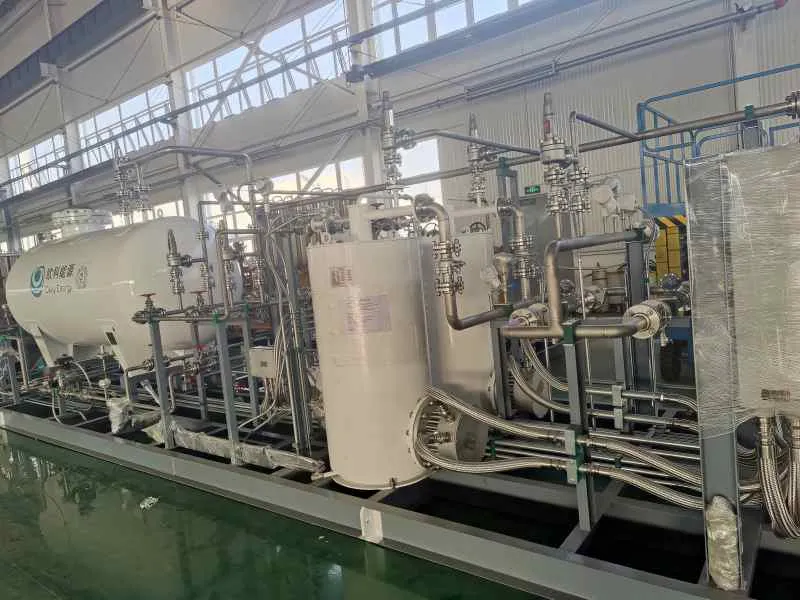
Four ways to heat the gas
The system is modular and combines heat-exchange technology with your on-site working conditions.
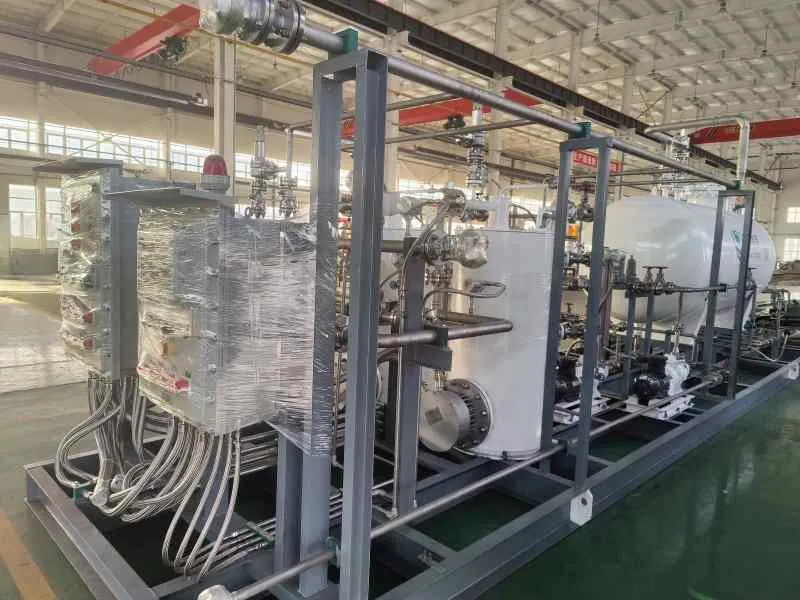
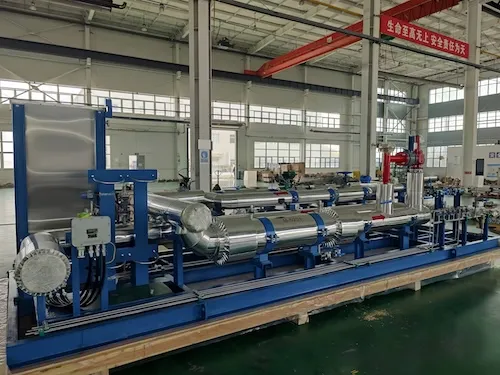
- Electric heating water bath — for low gasification volumes, abundant electricity or no other heat source; uniform heating and fast response
- Warm water circulation — uses existing boilers or hot water through a closed circulation loop; suited to continuous production
- Steam heating series — steam direct heating, steam water bath and intermediate-medium indirect heating, for high gasification volumes on an existing steam network
- Heavy-component separation — an integrated module removes or recovers heavy components so output gas purity meets the user's requirement and downstream equipment lasts longer
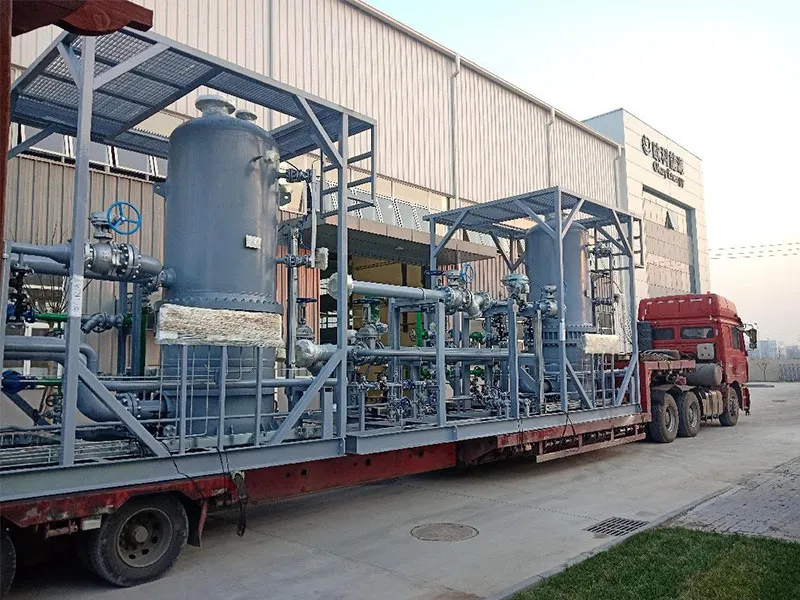
Skid-mounted by design
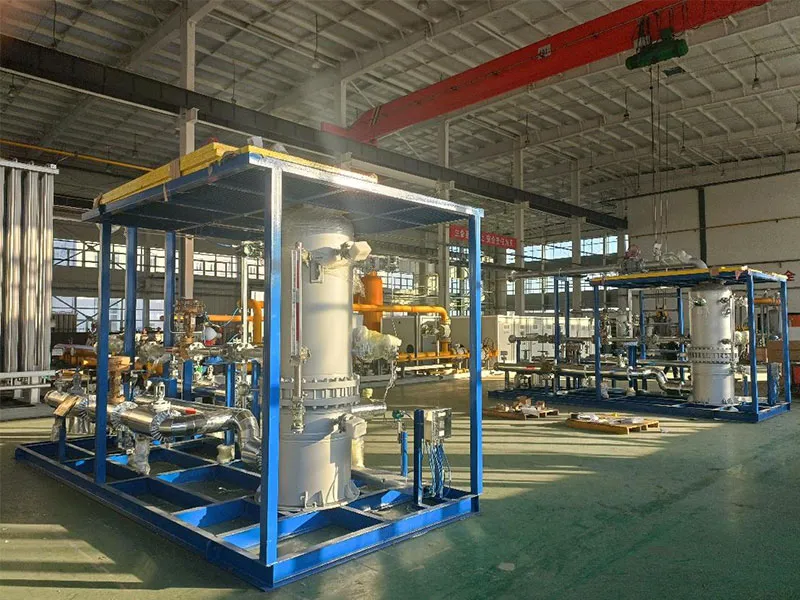
- Pre-installed and pre-commissioned in the factory, which cuts on-site construction and installation time
- Compact layout for land-constrained or remote sites
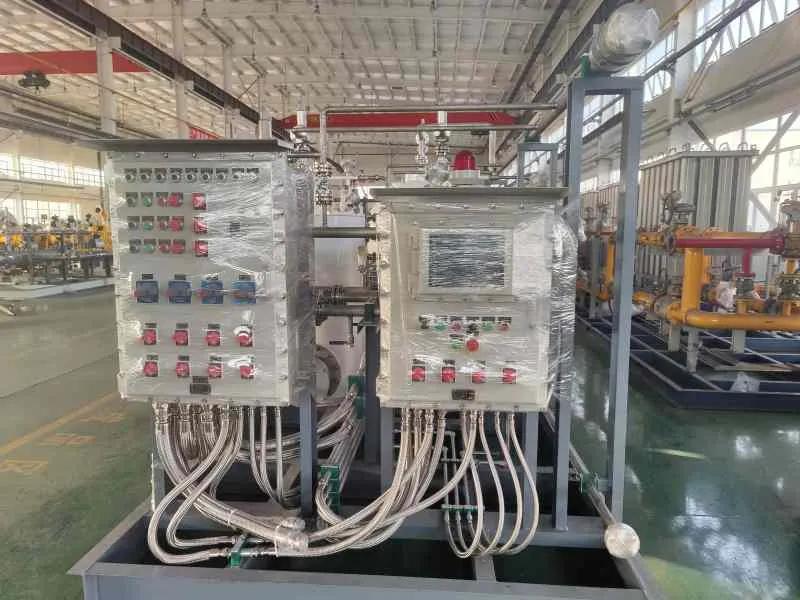
- Fully automatic PLC/DCS control module with real-time monitoring of gasification efficiency, temperature and pressure; remote operation and maintenance supported
Applications
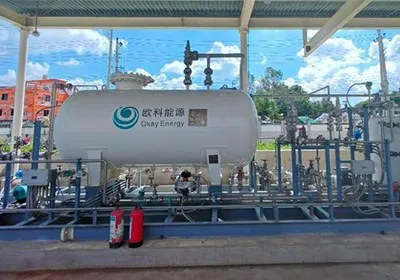
- Commercial centralized gas supply: Provide LPG vapor-phase supply to hotels, restaurants and commercial facilities, meeting centralized consumption and peak load demand.
- Industrial boilers and heating: Where the natural vaporization capacity of storage tanks is insufficient, external heating increases vaporization capacity to supply boilers and heating equipment.
- Agricultural drying: Supply fuel to gas-intensive processes such as grain drying, with equipment sized according to seasonal load and continuous operating time.
- Livestock facility heating: Meet the fuel demand of livestock facilities in low-temperature seasons, with vaporization capacity configured according to ambient temperature and peak heating load.
- Gas for metallurgical processes: Provide gaseous fuel to metallurgical processes that use LPG, with supply pressure, composition and cleanliness determined by process requirements.
- Liquid hydrocarbon vaporization in petrochemical units: A dedicated vaporization system is configured for the specified hydrocarbon medium, with the heat exchange and control scheme determined by the medium's properties, design temperature and pressure, and heat source conditions.
Customised to the raw material
Solutions are tailored to raw-material characteristics (for example the ultra-low temperature of ethylene), local climate and energy conditions. Service covers design, manufacturing, installation and commissioning, and technical training.
Reference projects
| India — steam heated LPG vaporizer | 25,000 kg/h, skid mounted |
|---|---|
| Saudi Arabia — electric water bath LPG vaporizer skid | 100 kg/h, 0.8 MPa working pressure |
| Ghana — LPG mixing skid | Up to 20,000 kg/h (propane 6,000 + butane 14,000) |
| Bangladesh — electric water bath LPG vaporizer station | Power plant ignition gas |
Parameters as listed on each project page.
FAQ
Why is LPG vaporization capacity usually expressed in kg/h?
kg/h is the mass vaporized per unit time. Converting to a gas volume flow requires the LPG composition and the reference temperature and pressure of the volume flow to be specified; it cannot be equated directly with Nm³/h.
Does a change in the propane/butane ratio affect sizing?
Yes. Composition changes affect vaporization conditions. Please provide the actual composition and its range of variation, and the equipment capacity will be verified against the minimum ambient temperature and the maximum gas consumption.
Is the water bath temperature the same as the outlet gas temperature?
No. The water bath temperature reflects the state of the heating medium; the outlet gas temperature is also affected by flow rate, inlet conditions and the heat exchange process. The two should be determined separately.
Can on-site hot water or steam be used?
Hot water circulation or steam heating schemes can be evaluated according to the heat source conditions. For sizing, please provide the heat source temperature, pressure, available flow and supply stability.
How can the risk of unvaporized liquid entering downstream be reduced?
The vaporization capacity at peak load must be verified, and, depending on the equipment type, liquid carryover protection, temperature monitoring and heat source fault interlocks should be provided. The specific protection method should be consistent with the process scheme.
Can an LPG vaporizer be used directly for ethylene or propylene?
It cannot be directly substituted. For each medium, the physical properties, material compatibility, design temperature and pressure, sealing and control requirements must be checked separately before the suitable equipment is determined.
Gallery
Equipment photographs
Projects
Where this equipment is running
IndiaSteam heated LPG vaporization
Steam heated LPG vaporization system for a fuel gas pipeline network, India
25,000 kg/h
Saudi ArabiaLPG vaporizer skid for flare and boiler ignition
Electric water bath LPG vaporizer skid for flare & boiler ignition gas, Saudi Arabia
100 kg/h
BangladeshLPG vaporizer station for power plant ignition gas
Electric water bath LPG vaporizer station for power plant ignition gas, Bangladesh
LPG vaporizer station for power plant ignition gas
GhanaLPG mixing skid
LPG mixing skid system, Ghana
20,000 kg/h
Tell us your gas, flow and pressure.
We come back with a configuration and quotation basis for your conditions.